Our reviews go beyond the demo: we test, research, ask experts, and listen to real users.
How we review software at Desk365
When it comes to help desk and ticketing software, there’s a lot of noise out there. Every vendor claims to be “the easiest to use” or “the most powerful,” and most review sites either feel like thinly veiled ads or read like they were written by someone who’s never actually opened the product. We wanted to do better than that.
When we write a review, comparison, or “best alternatives” guide, we actually use the tools we’re talking about. Our goal is simple. By the time you finish reading one of our pieces, you should know whether a tool is genuinely worth your time, without having to dig through ten browser tabs to figure it out yourself.
A bit about where we're coming from
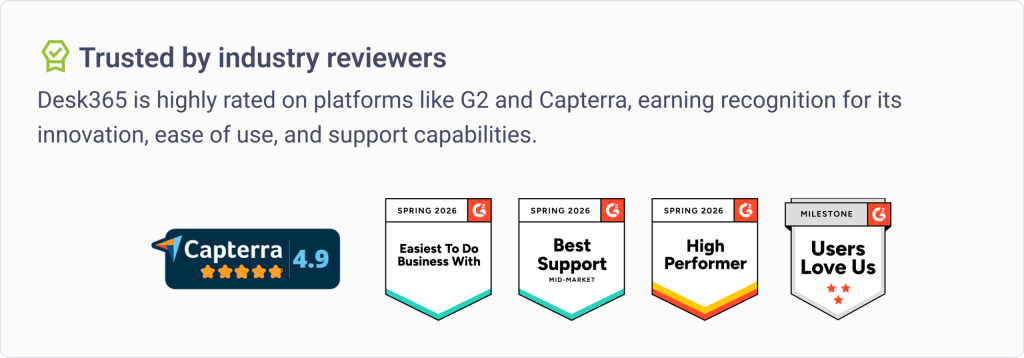
Desk365 started as an AI-powered helpdesk built around Microsoft Teams, and over time it’s grown into something a lot of support and IT teams genuinely seem to trust and like. In G2’s Spring 2026 reports, we picked up badges for Easiest To Do Business With, Best Support (Mid-Market), and High Performer, plus G2’s Users Love Us badge, which comes from real customer satisfaction scores, not anything we can buy or game.
We’re not saying this to brag (okay, maybe a little) but because it matters for how we write reviews. We talk to support and IT teams constantly. We hear what frustrates them about their current tools, what they wish existed, and what made them switch. That context shapes how we evaluate everything, including products that compete directly with us.
How we actually do this
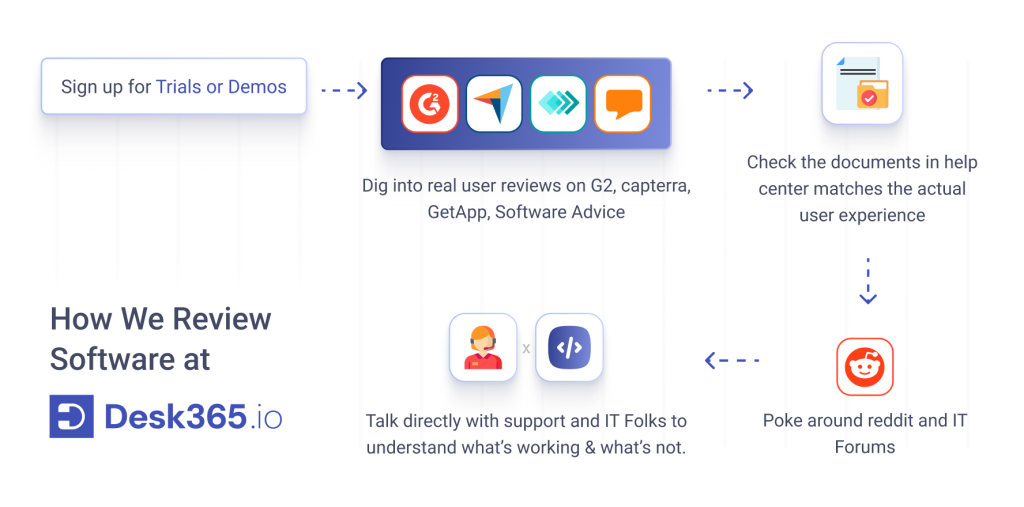
There’s no single formula, because not every tool deserves the same kind of scrutiny. But generally, here’s what goes into a review:
If permissible, we sign up for trials or demos, and genuinely try the product, not just skim the marketing site
We dig into real user reviews on G2, Capterra, GetApp, and Software Advice, including both the positive and negative ones
We read the documentation and help centers, then check whether what’s written there matches what users actually experience
We poke around Reddit and IT forums, because that’s often where people are most candid
We talk directly with support and IT folks about what’s working for them and what isn’t. If a customer has switched from a different tool to ours, we validate with them too.
If our own hands-on testing and what real users are saying don’t line up, that’s usually a sign there’s more to the story, and we’ll dig deeper.
What we're actually looking at
When we compare help desk and ticketing tools, these are the things we care about most:
Can you actually set it up without a headache? We pay attention to how long it takes to go from “just signed up” to “actually running our support workflow,” and whether non-technical folks can find their way around without a training session.
Does it cover the basics well? Ticket routing, automation, SLAs, multi-channel support (email, chat, web forms), a knowledge base, self-service options. The fundamentals matter more than flashy extras.
How well does it play with Microsoft 365 and Teams? A lot of support teams already live in Outlook and Teams all day, so we look closely at whether a tool fits naturally into that world or forces people to keep switching contexts.
Is the AI actually useful, or just a checkbox? Auto-assignment, AI-suggested replies, ticket summarization. We care about whether these features save real time, not just whether they exist.
Can you make sense of your data? Good reporting and dashboards should tell you what’s going on with SLAs, agent performance, and ticket trends without needing a separate analytics tool bolted on.
Is the pricing fair for what you get? We look at what’s actually included at each tier and whether it makes sense whether you’re a five-person team or scaling fast.
What happens when something goes wrong? Support quality and onboarding experience say a lot about a company. We factor that in too.
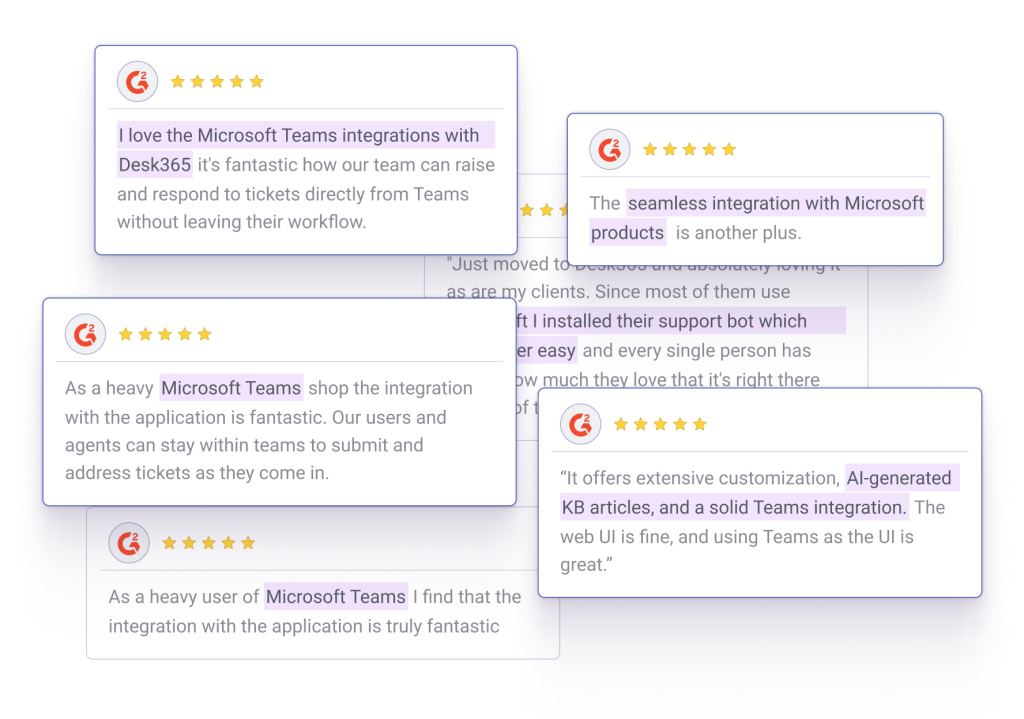
A few things people have said about us
Afew things real users have said we’re pretty proud of:
Yes, Desk365 is a help desk platform, and yes, we obviously think it’s a good one. But when we write about other tools, including ones that compete directly with us, we stay objective If something is better suited to your team than we are, we’d rather tell you that than waste your time. We hold ourselves to the same standard we hold everyone else to.









 AI Agent
 Asset Management
 Knowledge Base
 Automations
 SLAs
SLAs
 Customization
 Ticket Assignment
 Reports & Analytics
 Approval Management
 Helpdesk Security
 Explore All Features
 Banking and Finance
 Healthcare
 MSP
MSP Government
  Non Profit
 IT Services
 Customer Support
 Human Resources
 Facilities