
Small and mid-sized IT and support teams are living two truths.
A. Support is stuck across many disconnected tools.
B. AI bridges this gap, but not entirely.
AI is changing what a helpdesk can do, but IT teams are not ready to hand over the reins just yet. Desk365 surveyed 92 helpdesk users across small and mid-sized businesses to understand how teams are managing support today, where their biggest operational gaps lie, and what they expect from AI.
Here’s what the data tells us about the state of IT helpdesk operations.
1. 97% of IT users are using helpdesks to organize tickets
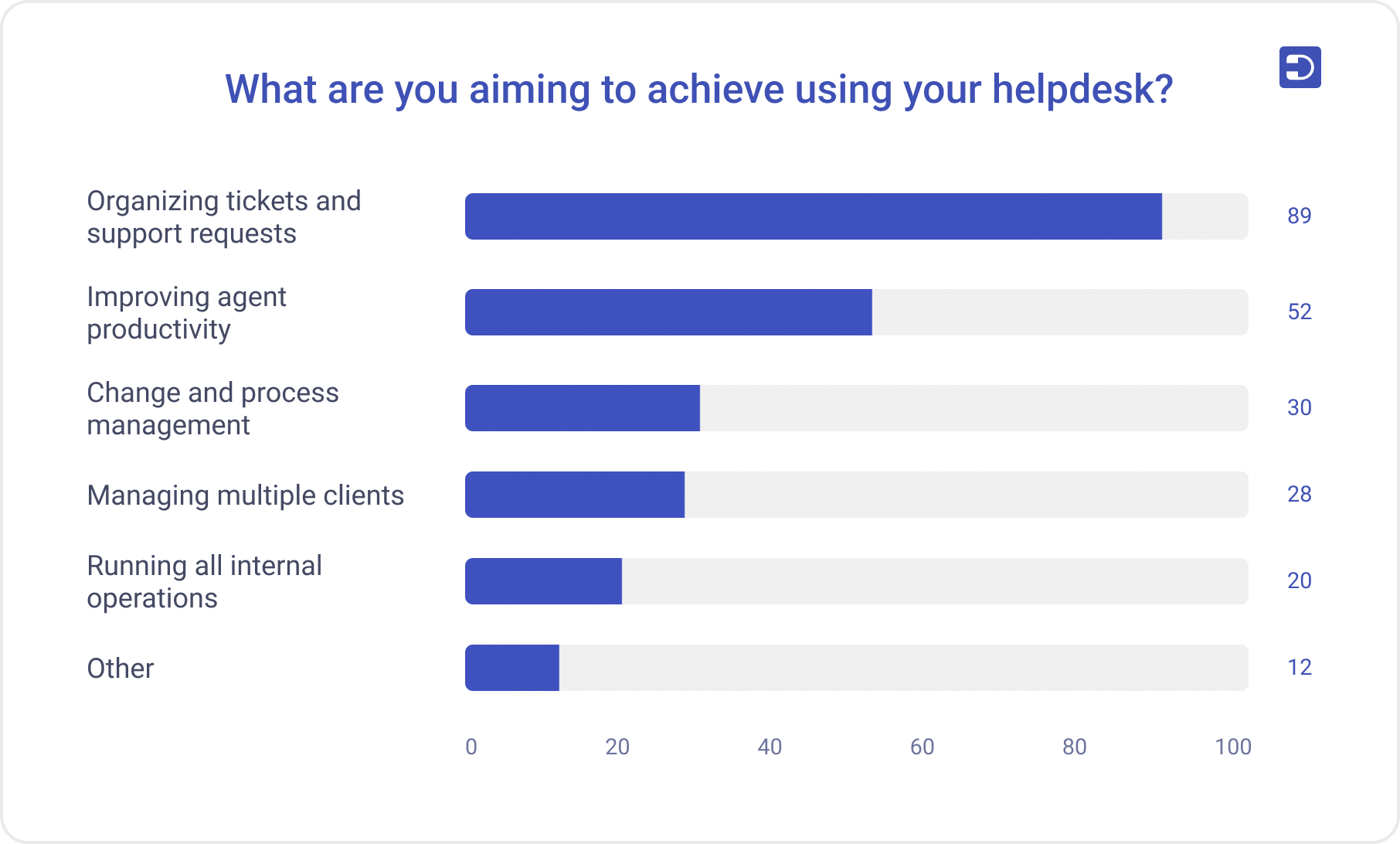
We asked respondents what they are primarily trying to achieve with their help desk. 89 out of 92 respondents said they use their helpdesk to organize tickets and support requests.
Improving agent productivity was the next most common use case, selected by 52 respondents.
97% of IT users are still using helpdesks to simply organize tickets and workflow as opposed 56% respondents using them to also improve agent productivity.
The finding is a reminder that, despite the growing focus on AI and service management, ticket organization remains the foundation of the helpdesk.
For most teams, the helpdesk still needs to make it easy to capture requests, assign ownership, track progress, manage communication, and maintain a reliable record of every issue. Advanced capabilities only create value when the core ticketing experience remains simple and dependable.
Takeaway: Before a helpdesk can become an intelligent service management platform, it must first make everyday ticket management easier.
2. Missing information causes workflow delays for 2/3 IT managers
64 out of 92 respondents said missing information causes delays in their support workflows. The problem often begins before an agent starts working on the ticket.
A request may arrive without the affected device, application, user, department, urgency, or relevant troubleshooting history. The agent then needs to go back to the requester, ask follow-up questions, and wait for the information required to proceed.
That creates additional exchanges and slows down resolution.
But, better intake can reduce delays at the source.
A helpdesk should be flexible enough to collect the right information based on the type of request.
A hardware issue may need an asset number, device name, location, and affected user. An access request may need a department, manager, business justification, and approval. A software issue may require the application name, error message, and steps already attempted.
Customizable ticket forms help teams capture this context from the beginning.
The helpdesk should also support collaboration between different stakeholders. IT may need information from HR, finance, security, infrastructure, or a department manager before resolving a request.
Cross-functional collaboration was a close second followed by cross-team collaboration and poor documentation.
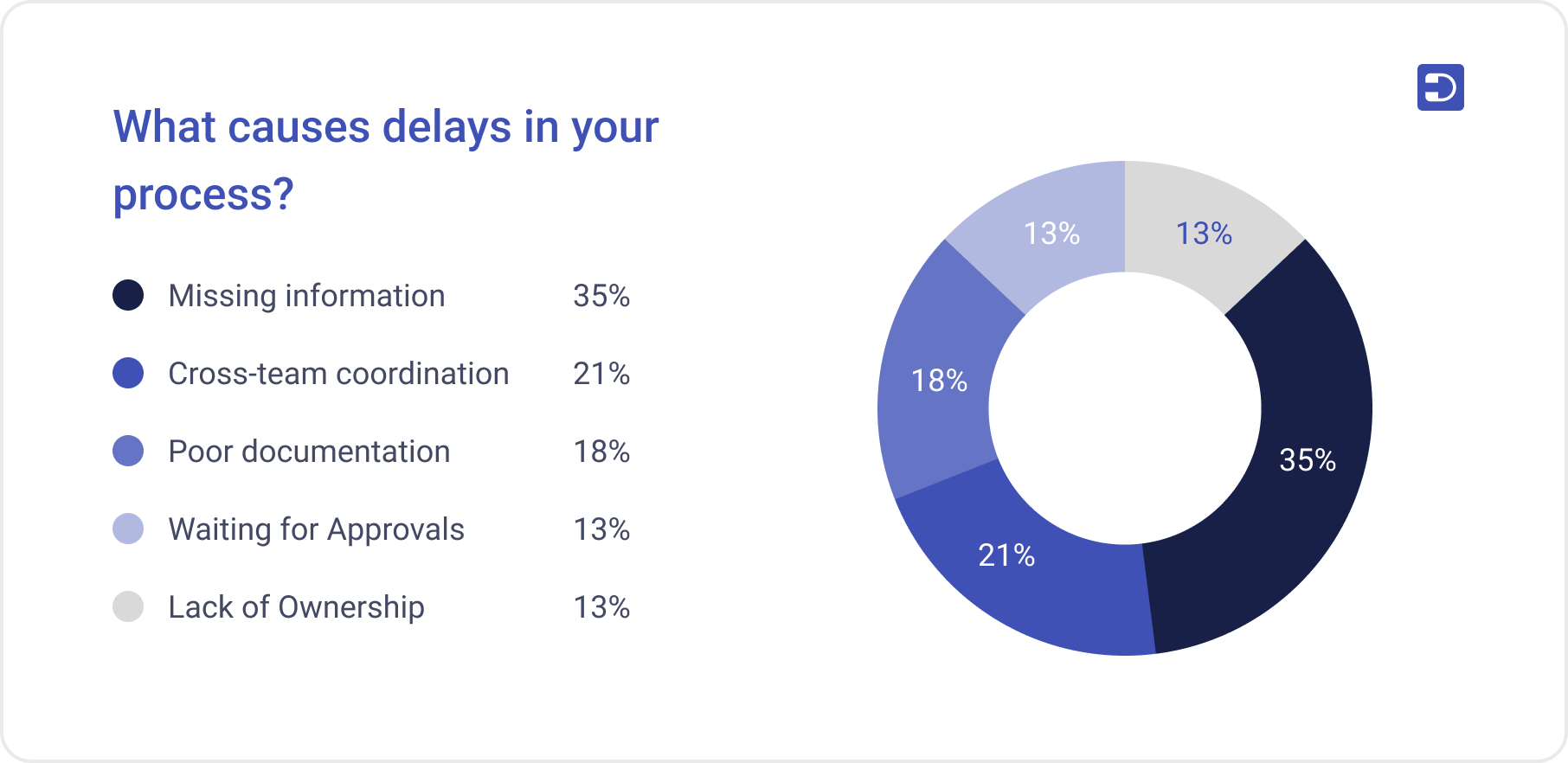
Takeaway: Better support does not begin only with faster responses. It begins with better information entering the helpdesk and easier collaboration around the ticket.
3. A typical tech stack is 3-5 tools
54% of respondents indicated they use 3-5 tools in addition to their helpdesk, while another 43% get by with one or two tools, a sign of simpler internal IT setups. Only 2% of respondents use six to 10 tools, and nobody reported needing more.
While extreme sprawl is rare in small and medium businesses, the more common story, more than half of respondents, is a support process already spread across several disconnected systems: the helpdesk, a knowledge base, an asset inventory, chat, email, maybe a separate approval tool. That lines up with what respondents told us already. Missing information and poor documentation top the list of delays, and tool sprawl is very often the reason behind both. When the facts an agent needs live in a third or fourth system, they get missed.
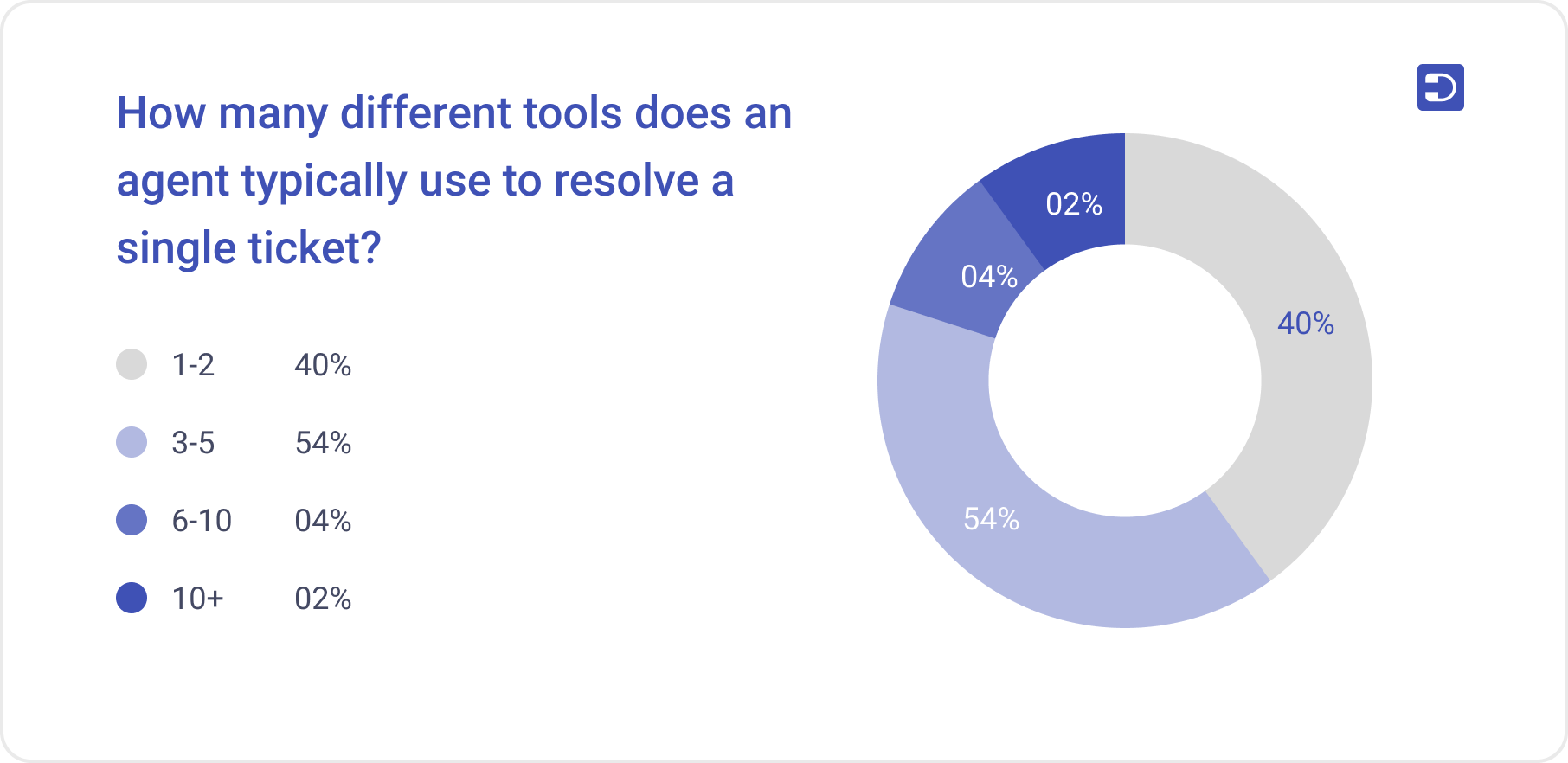
Takeaway: Fewer tools could still mean context is elsewhere. Tighter integrations should ensure every system an agent needs is plugged directly into your helpdesk.
4. Knowledge management is the top capability teams want to improve
48 out of 92 respondents said they want their teams to get better at knowledge management. Workflow automation followed with 40 respondents, while self-service was selected by 39.
Given that information gaps and tool sprawl are the biggest pain points, it tracks that the top capability people want to build is knowledge management, not AI, not automation, and not reporting.
When knowledge lives across individual employees, chat threads, documents, and disconnected systems, agents spend more time searching for answers or asking colleagues for help.
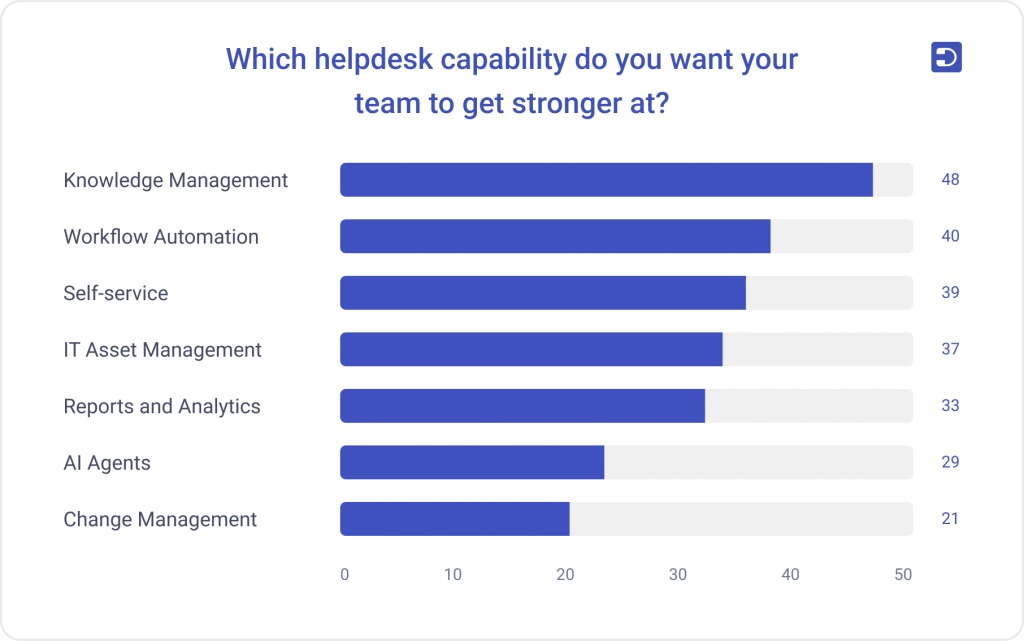
Takeaway: Knowledge management is not separate from AI readiness. It is one of the foundations that makes both human and AI-assisted support more effective.
5. Ease of use and pricing is the biggest reason users switch helpdesk vendors
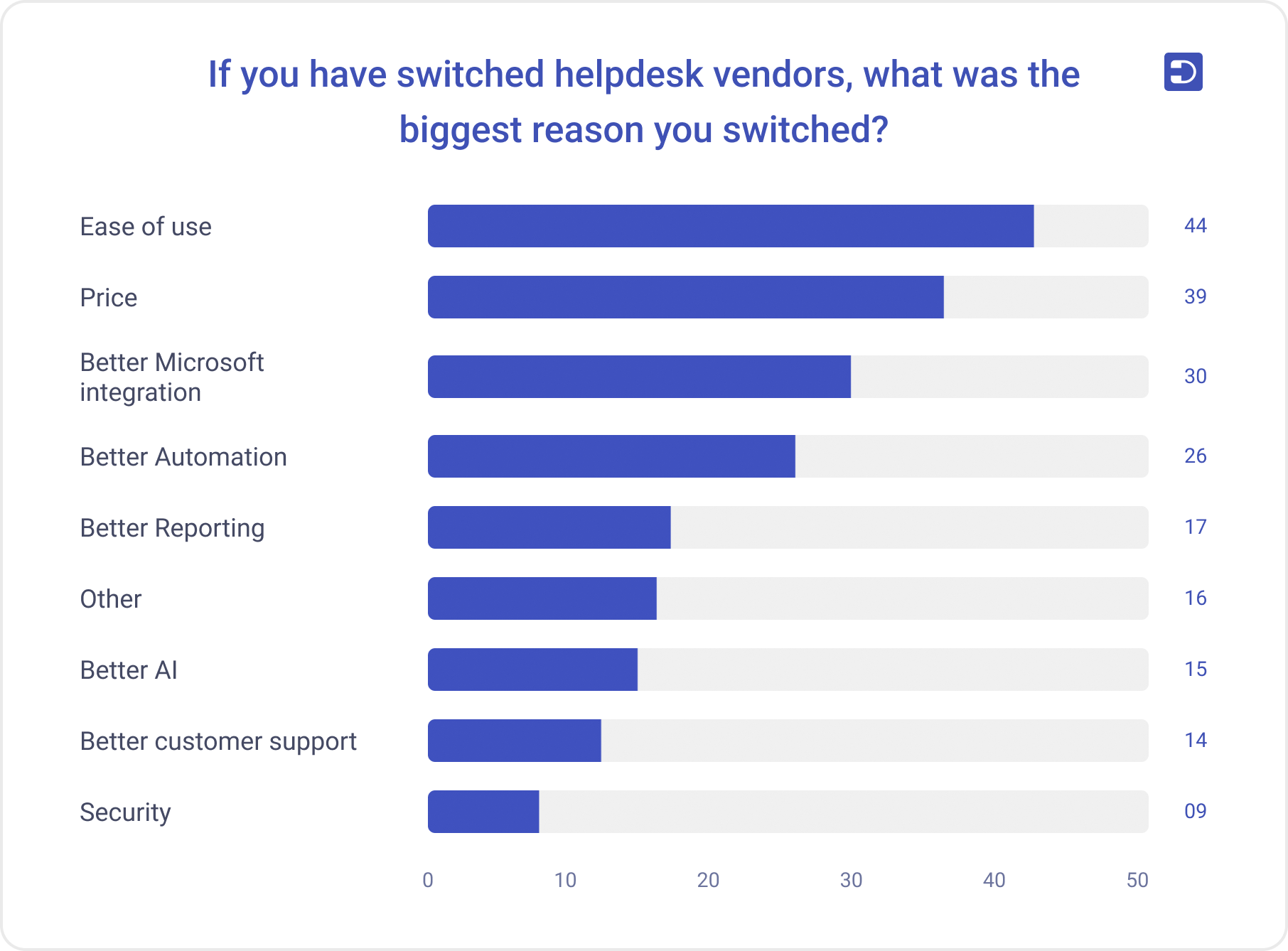
44 out of 92 respondents said they switched helpdesk vendors because they wanted a solution that was easier to use. Ease of use was also the single most important factor when choosing a helpdesk, ranking ahead of Microsoft integration, security, automation, support, AI, and reporting.
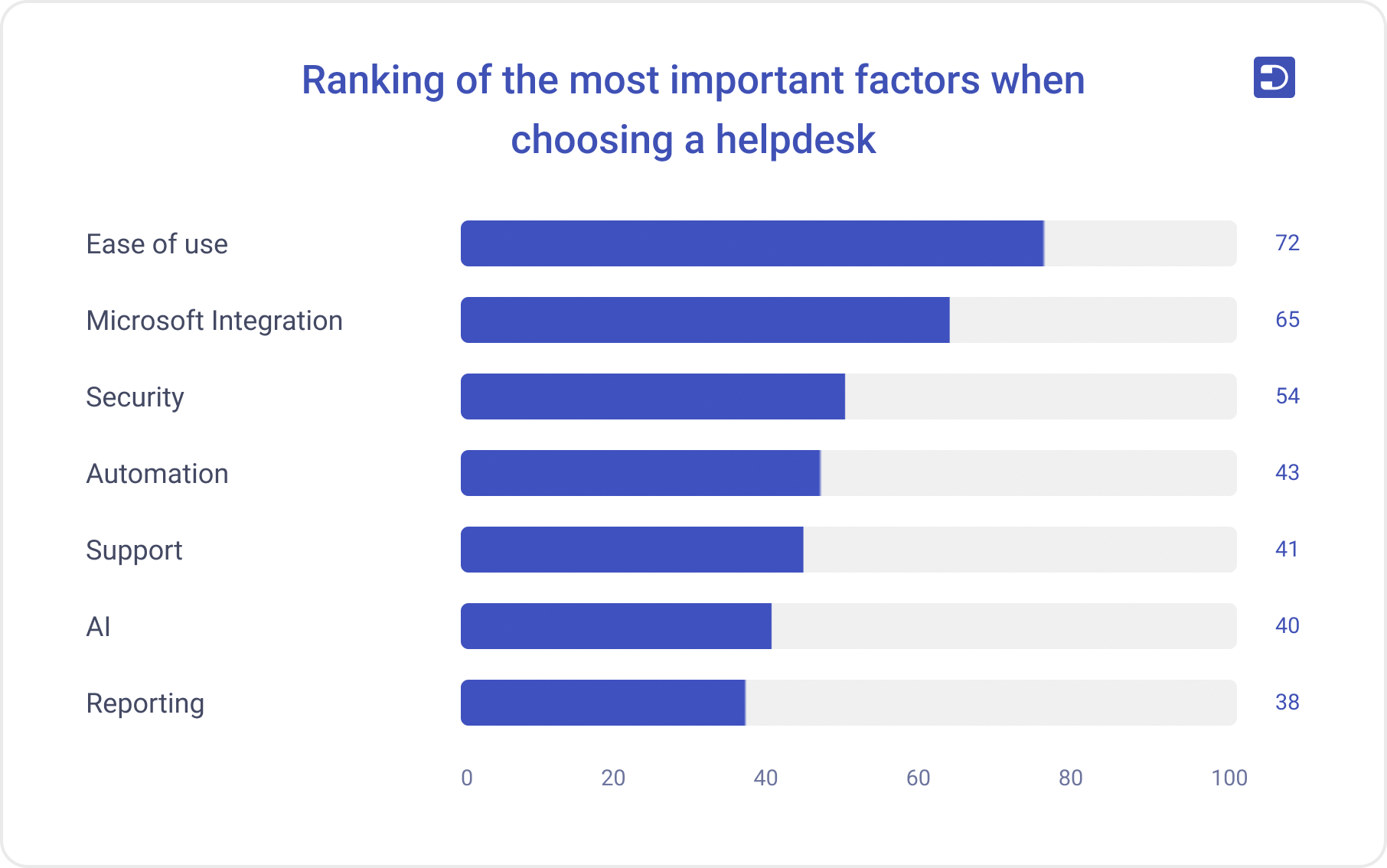
When it came to switching vendors, price was the second biggest reason, followed by better Microsoft integration and automation. Better AI ranked lower, with 15 respondents selecting it, while security and customer support were cited less often.
For teams solving complex issues every day, the helpdesk should not become another problem to manage. They expect their primary support tool to be intuitive, easy to navigate, and simple to configure, even when the work itself is complicated.
Takeaway: Support teams need powerful capabilities, but they also expect the platform they use every day to be easy and intuitive.
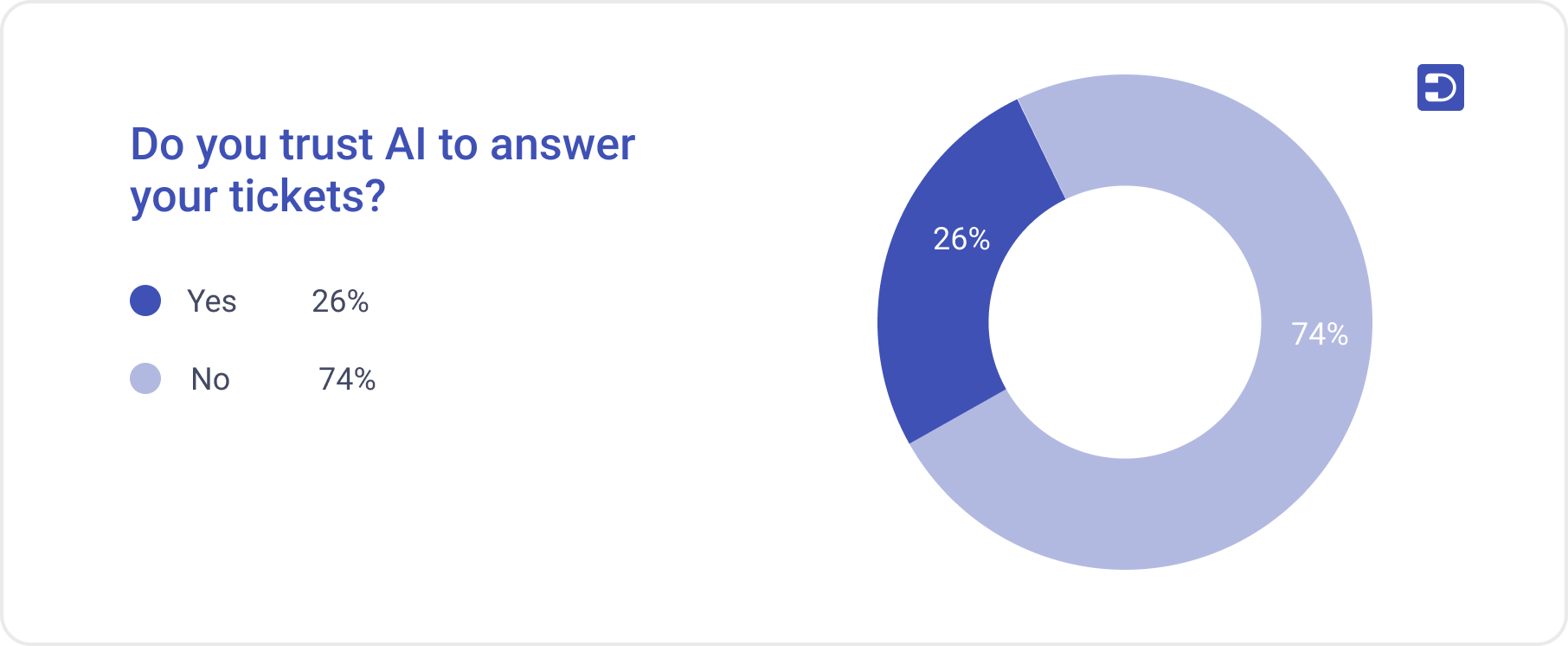
6. 74% of helpdesk users said they do not trust AI
This is the strongest AI signal in the survey. However, it does not mean that helpdesk users reject AI altogether. Respondents still want to automate repetitive support work, improve their ticket queues, and strengthen knowledge management.
Their concern is more specific: they are not yet comfortable allowing AI to take responsibility for answering support requests.
Support tickets can involve sensitive information, access permissions, security issues, business-critical applications, and complex technical situations. An incorrect answer can create more work or introduce operational risk.
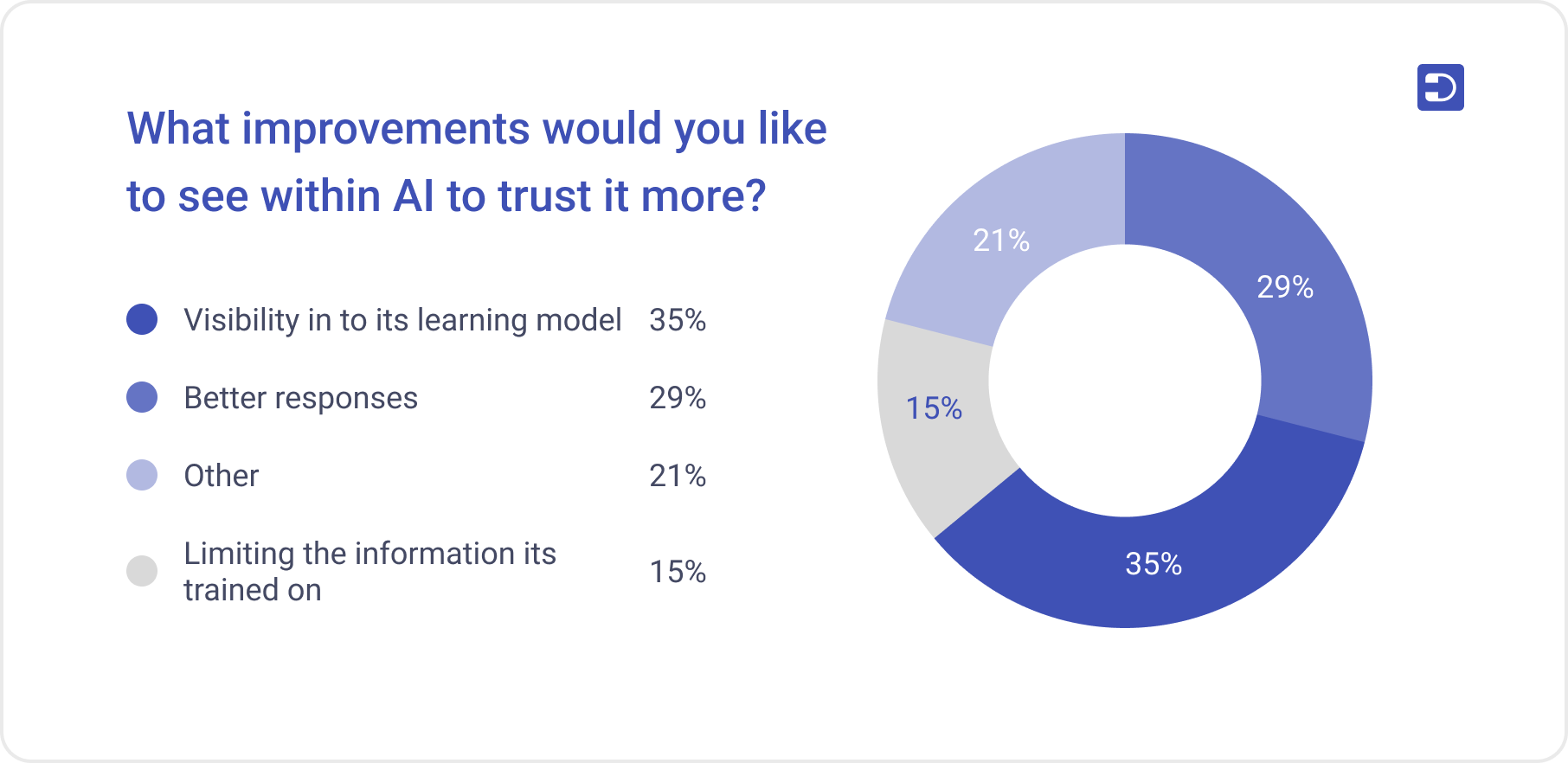
Trust in AI depends on transparency and control. When asked what would make AI more trustworthy, 35% of respondents selected visibility into how the AI learns, making it the most common requirement. Better responses followed at 29%, while 15% wanted more control over the information AI is trained on. This shows support teams are not looking for AI that simply answers faster. They want to understand how it works, control what it can access, and feel confident that a human can step in when needed.
This is why AI adoption should begin with clearly defined use cases, approved knowledge sources, and clear escalation rules.
Takeaway: AI adoption is not only a capability problem. It is a trust, transparency, and control problem.
State of IT helpdesks in small and medium businesses
The findings show that helpdesk users are ready for better ways to manage support, but they are not willing to sacrifice control, usability, or trust.
Across the responses, a few priorities stood out:
- Ease of use comes first. Teams want a helpdesk that is simple to navigate and manage, even when support workflows are complex.
- Disconnected tools slow teams down. Missing information, cross-team coordination, and tool switching create delays in resolving tickets.
- Automation is a clear opportunity. Respondents want help with repetitive tickets, knowledge management, self-service, and workflow automation.
- AI must earn trust. Most respondents are still cautious about AI handling support tickets without oversight.
- Transparency and control matter. Users want to understand how AI learns, improve the quality of its responses, and control the information it can access.
These insights shape how we think about building Desk365. Our goal is not to add AI simply because it is becoming standard across the helpdesk market. We are building AI to solve real support challenges, reduce repetitive work, improve productivity, and help teams manage growing ticket volumes without adding more complexity.
That means AI should work within the helpdesk, not create another tool for agents to learn. It should support human decision-making, provide useful context, and allow teams to decide where automation makes sense. Most importantly, it should be transparent, configurable, and easy to control.
The Desk365 AI philosophy
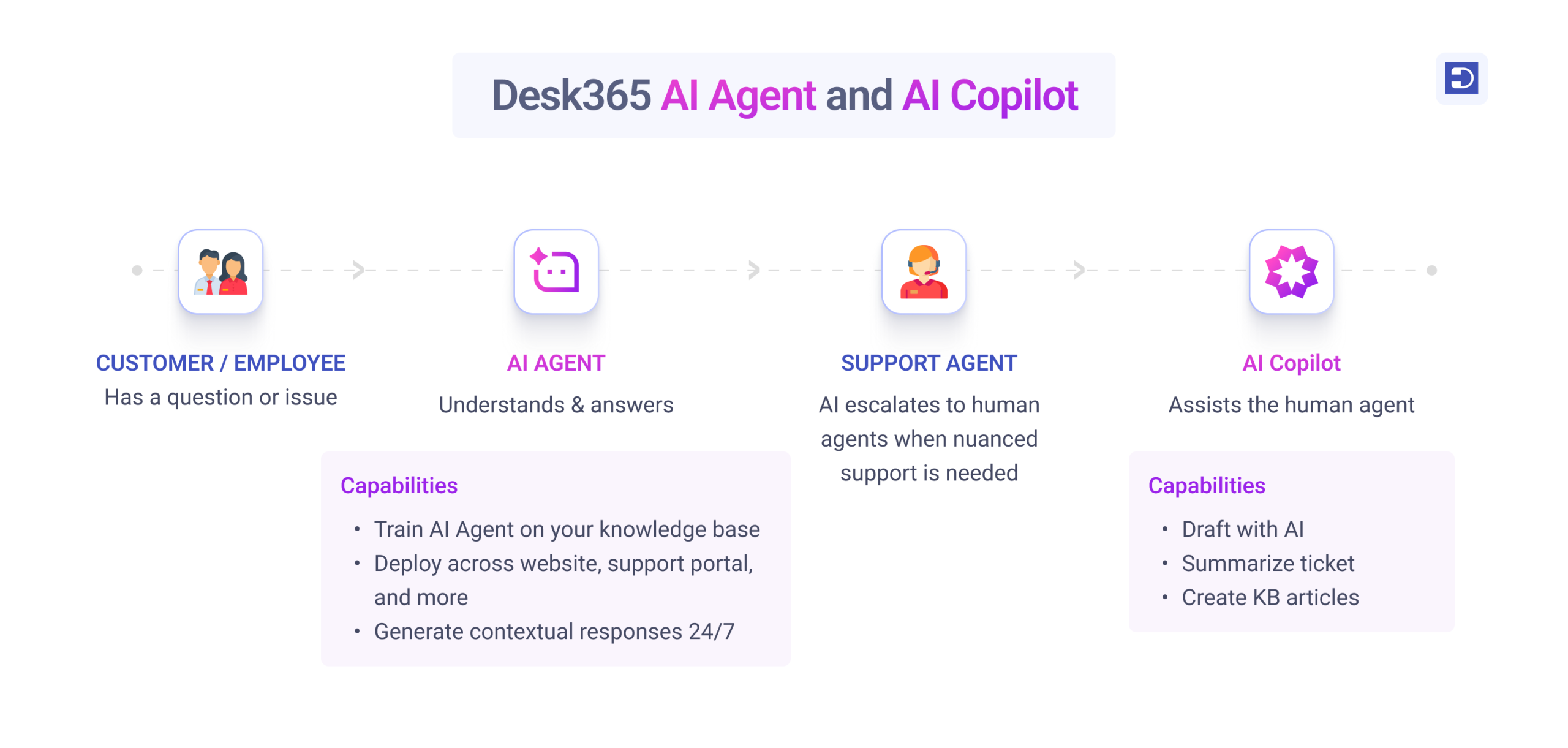
At Desk365, we believe the best AI Agent is not one that knows everything. It is one that knows what it needs to know to do its job well.
That is why Desk365 lets you train your AI Agent on limited, relevant knowledge instead of giving it unrestricted access to everything. By controlling the information used to train the Agent, you can guide its responses, reduce unwanted answers, and maintain full control over what it can and cannot do.
Our philosophy is simple: train the AI Agent on the knowledge it needs, so you stay in control of the AI Agent. Learn more about the Desk365 AI Agent here.
Report Methodology
Desk365 surveyed helpdesk users (IT managers, admins, and agents) from small and mid-sized businesses to understand how teams manage support requests, deal with operational delays, use multiple tools, choose helpdesk software, and evaluate AI for support.
The survey covered:
- Operational goals
- Causes of process delays
- Number of tools used to resolve a ticket
- Helpdesk capabilities teams want to improve
- Factors considered when choosing a helpdesk
- Reasons for switching helpdesk vendors
- Trust in AI-generated ticket responses
- Improvements needed to increase trust in AI
- Repetitive tasks respondents would like to eliminate
We received 92 responses. Some questions allowed respondents to select multiple answers, so the totals for those questions exceed the number of respondents.




 AI Agent
 Asset Management
 Knowledge Base
 Automations
 SLAs
SLAs
 Customization
 Ticket Assignment
 Reports & Analytics
 Approval Management
 Helpdesk Security
 Explore All Features
 Banking and Finance
 Healthcare
 MSP
MSP Government
  Non Profit
 IT Services
 Customer Support
 Human Resources
 Facilities